
As of 10 November, the 2026 Alba white truffle season has moved from a slow, small start to a firmer one: more truffles and better aroma, but still too few for demand, and prices that keep climbing. A hot, dry summer and a warm start to autumn kept the woods of the Langhe and Roero thin through October. Early November brought a larger and better supply to the Alba market, yet hunters say the real improvement may only arrive in the second half of the month.
The weather: a good spring, then a hard summer
The trees had water early in the year and lost it when the truffles needed it most. Antonio Degiacomi, president of Alba’s Centro Nazionale Studi Tartufo, says the 2026 season followed good winter and early-spring rain with long dry stretches and high temperatures, and that it does not look like an easy one (Gazzetta d’Alba). The Centre counts reasonably moist topsoil, even in the driest months, among the conditions the white truffle needs.
The heat carried into autumn. Local reporting described the season opening after a hot summer and almost no rain in late September, with the first truffles scarce, small and still full of water.
Rain, when it arrives, is not an instant fix. The soil has to become properly moist again, and experts say it can take months before rainfall shows up in the quantity and quality of what is dug. That is why Alba hunters said before the opening that October would be critical and that good truffles would have to wait for November and December.
Degiacomi also notes that recent years have swung between extremes: one year so wet that truffles arrived waterlogged at the end of September, other years so dry that they arrived dehydrated. The climate pressure is already written into the calendar. Importers point out that the Piedmont harvest now opens later than the traditional September start (Abrate & Sons), and the 1 October opening is the result of a regional decision, taken with hunters’ associations and CNR advice, to avoid harvesting immature truffles.
Availability: some truffles, but few and mostly small
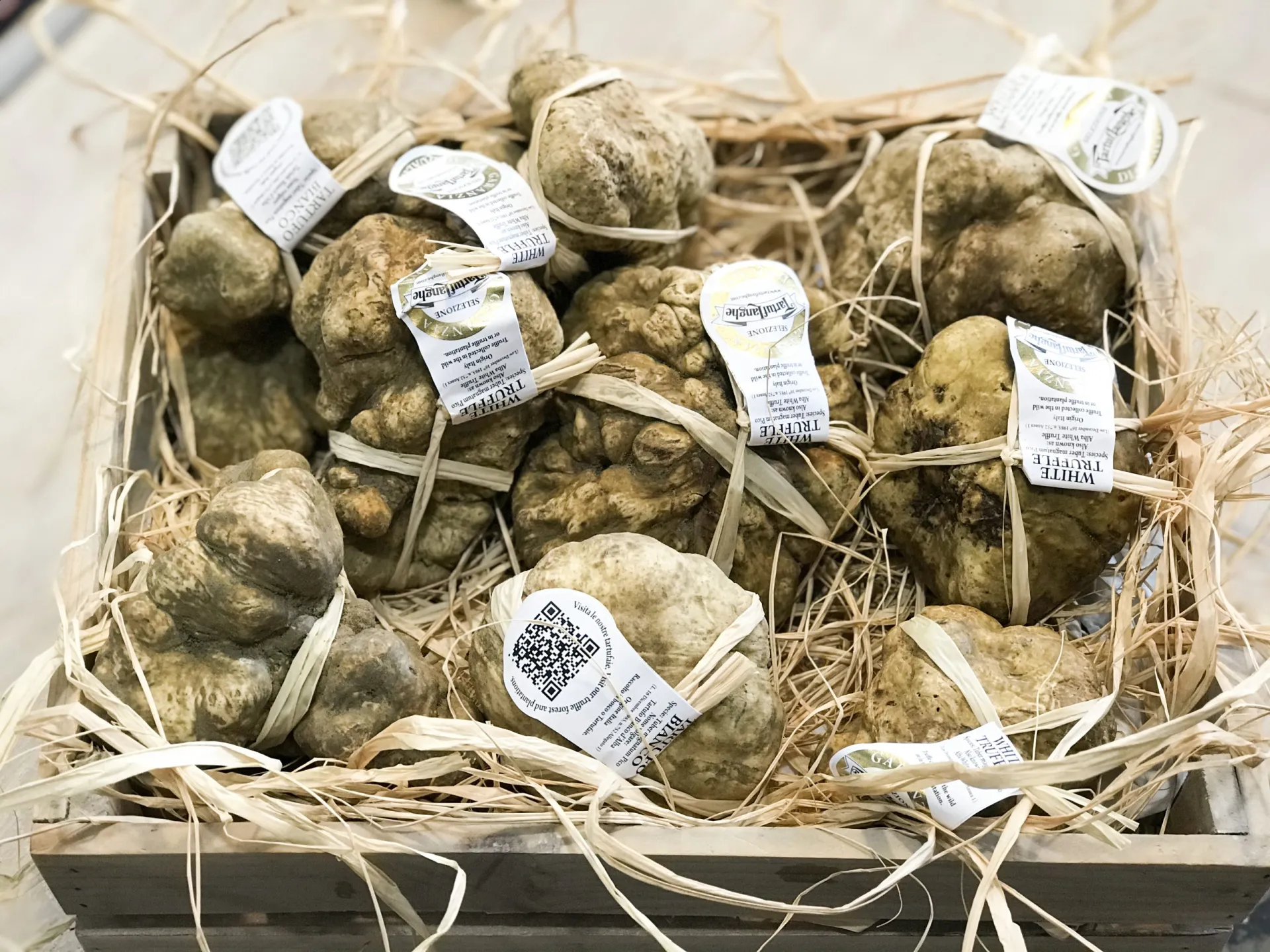
Alba’s first weeks have produced truffles, just not many. After the first night of searching, hunter Stelvio Casetta reported mostly small specimens and reminded readers that early October is never the best moment of the season. The first two days of the World Truffle Market, on 10 and 11 October, bore that out: reduced quantities and small sizes, as forecast (Gazzetta d’Alba).
The better news is quality. The market’s judges from the Centro Nazionale Studi Tartufo called quality positive in those first days and expect aromas to deepen as temperatures fall. Reports from central Italy fit the same pattern: buyers and hunters in Emilia-Romagna and the Marche described good quality and small, fragrant pieces, with quantity well down.
Early November brought some relief. Around the 1 November holiday weekend, Gazzetta d’Alba reported a larger supply than in the first weeks, with pieces that looked and smelled better, though still limited. Hunters at the fair lamented how late in the year the season allowed a more productive search (Gazzetta d’Alba).
Prices: above last year, and not yet settled
Prices in Alba are running above last year’s at the same point in the season, and scarcity is the explanation everyone gives. Once the market opened, quotations have been reported a clear step above those of a year earlier, depending on size. Higher prices have been linked to drought-driven scarcity.
The climb has continued into November. By the 1 November weekend it was hard to find anything at the early-season average at the Alba market, even for modest pieces, and the best specimens sat far above it. Large, well-off holiday crowds, Italian and foreign, met a supply that was better but still short, and local reporting called the rise relentless. Black summer truffle has stayed firm too, pulled along by the white (Gazzetta d’Alba).
Thin years have a pattern: when supply stays tight, prices tend to keep climbing as the season goes on. In 2024, local reporting described a poor harvest in which prices were still rising into December (Gazzetta d’Alba).
What to expect over the next few weeks
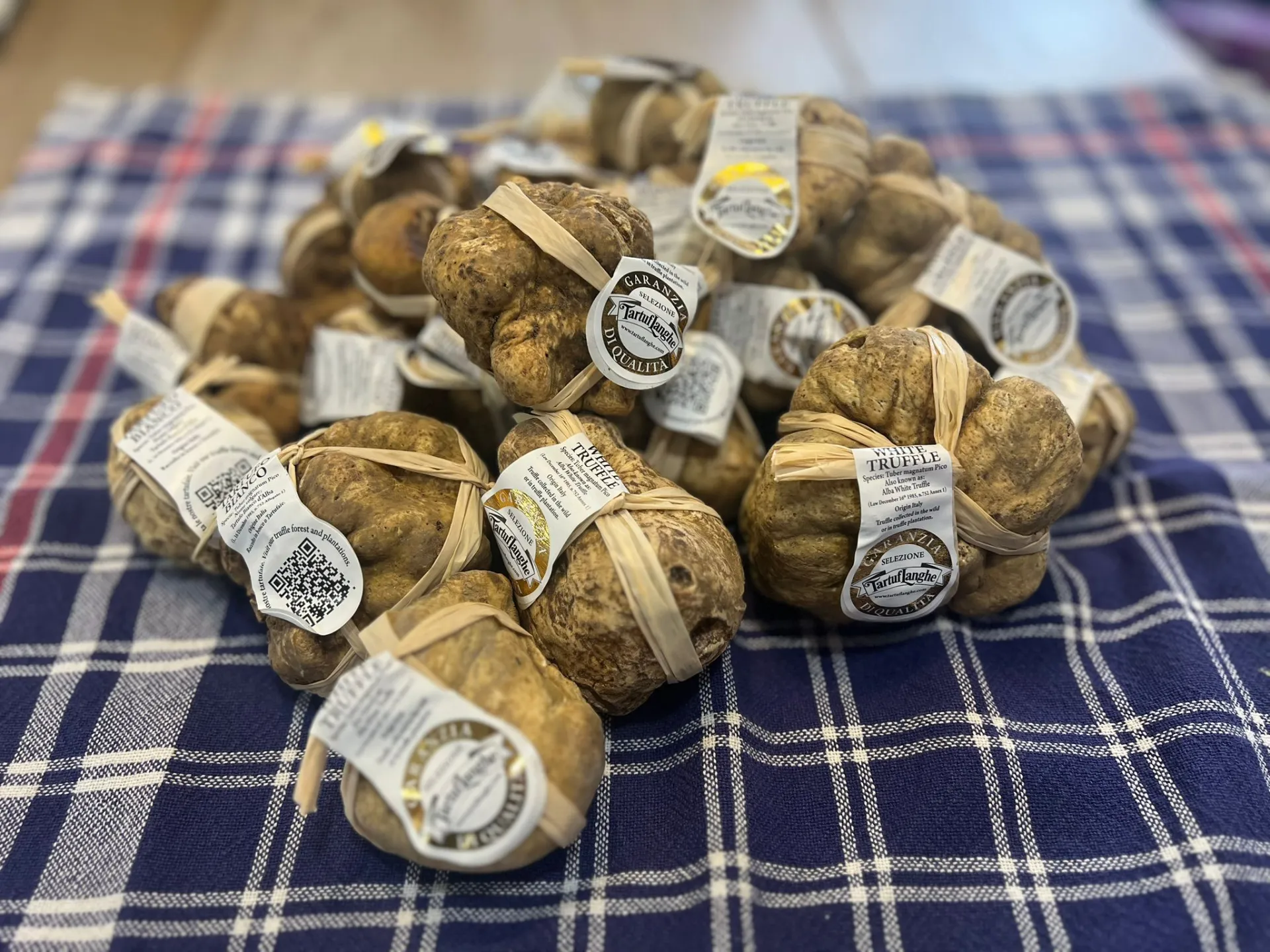
November is delivering part of what hunters promised, but not all of it. At the market weekend around 1 November, supply was larger and the truffles better than in the opening weeks, yet still short of demand (Gazzetta d’Alba). That fits the experts predictions that good truffles would come in November and December, because the first rains arrived in August and their effect takes about three months to show (Gazzetta d’Alba). The market’s judges tie aroma to falling temperatures, and importer’s forecast places the strongest window from mid-November through December (Abrate & Sons).
Two variables still decide how far it improves: rain and cold nights.
- If soil moisture holds and nights cool, volume and aroma should keep improving. Hunters at the fair told Gazzetta d’Alba that quantity and quality could rise in the second half of November, and the season looks to be recovering after the latest rains.
- If autumn turns warm and dry again, the thin pattern is likely to return. Time is short for a late rebound at the fair, which closes on 6 December, although the harvest stays legal until 31 January.
The World White Truffle Auction took place at Grinzane Cavour Castle on 8 November, linked live to nine cities. Hong Kong again won the final grand lot, and the day raised the second-highest charity total in the auction’s history (Gazzetta d’Alba). The market keeps opening on Saturdays and Sundays until 6 December.
Looking forward, the most likely path is a late-peaking season with tight volumes and firm prices, with a cold, damp November as the main upside and a warm, dry one as the main risk.
Notes for buyers and diners
In a thin year, where you buy and how fast you use the truffle matter more than usual.
- Buy from trusted importers. Buy from importers you know and trust for the checked origin and quality of the truffles
- Ask where it was found. “Alba” is not a protected designation, and the same species grows elsewhere, so ask for origin.
- Buy for days, not weeks. Aroma begins fading as soon as the truffle leaves the ground (Abrate & Sons). Alba’s truffle is used mostly raw, on simple dishes such as egg, fresh pasta and raw beef.