
Garofoli Winery: A Legacy of Verdicchio Excellence and the Iconic Podium Wine
In the vast and diverse landscape of Italian wine, where regions like Piedmont and Tuscany often dominate international attention, there are historic estates quietly shaping the identity of lesser-known—but equally remarkable—territories. One such estate is Garofoli, a benchmark producer from the Marche region whose legacy spans over a century. With deep roots in tradition, a forward-thinking philosophy, and an unwavering commitment to quality, Garofoli has become one of Italy’s most respected family-run wineries.
At the heart of its reputation lies a wine that encapsulates both the estate’s philosophy and the potential of its native grape: Podium, a Verdicchio dei Castelli di Jesi Classico Superiore that has become a reference point for the entire appellation.
This article explores Garofoli’s history, its role within Italian wine culture, its quality and recognition, and—most importantly—the story and significance of Podium.
The Origins of Garofoli: A Family Story Rooted in the 19th Century
The history of Garofoli begins in 1871, when Antonio Garofoli started producing and selling local wines in the Marche region of central Italy. (Wine)
This was a time when Italian wine production was largely local and agricultural, with little of the global prestige it enjoys today. Antonio’s work laid the foundation for what would become a multigenerational enterprise.
His son, Gioacchino Garofoli, expanded the business significantly and officially founded the winery in 1901. (Wine)
From there, the Garofoli family demonstrated a pattern that would define its future: continuity combined with innovation.
After World War II, Gioacchino’s sons, Franco and Dante, took over operations and formalized the company structure in 1950. (Wine) Their leadership coincided with a period of modernization in Italian wine, as producers began improving vineyard practices and winemaking techniques.
In the late 1960s and 1970s, Garofoli expanded significantly:
- Establishing a dedicated winery in Serra del Conte for Verdicchio production
- Expanding cellars in Castelfidardo for aging wines
- Acquiring vineyards in key zones like Montecarotto (Verdicchio) and Conero (red wines) (Wine)
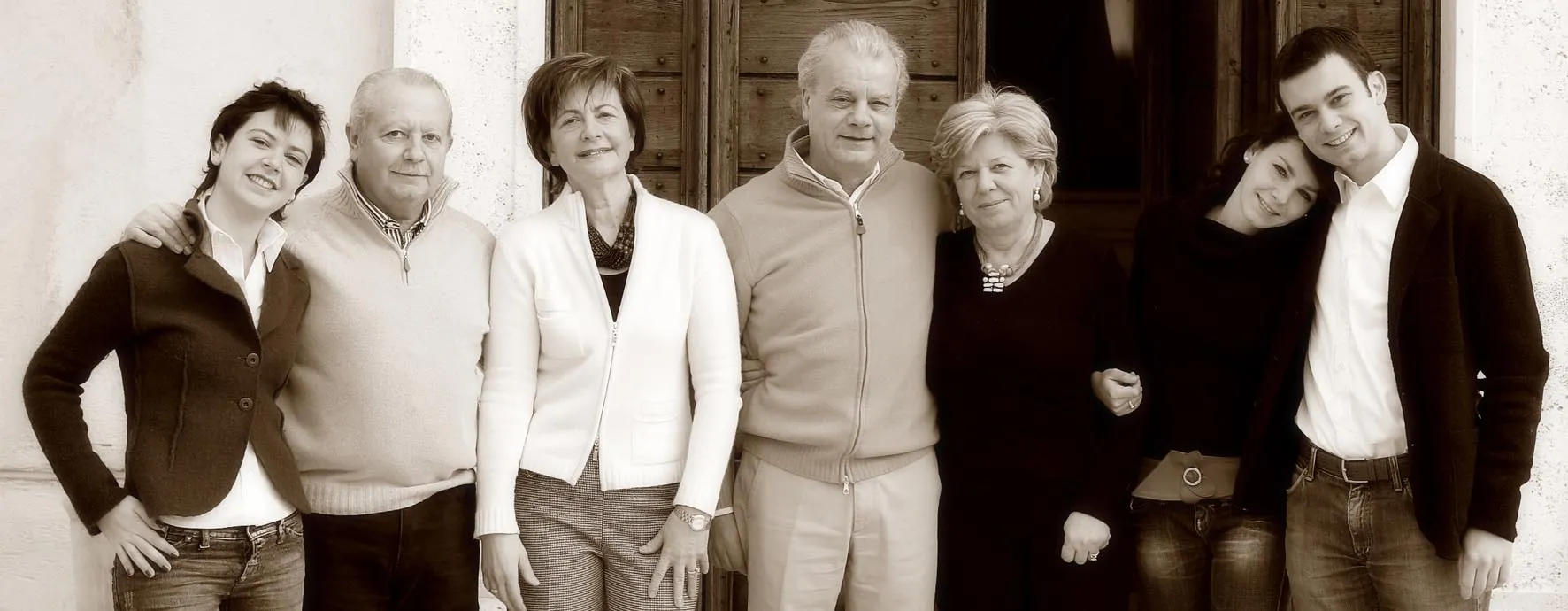
By 1973, the next generation—Carlo and Gianfranco Garofoli—joined the company, bringing further innovation and helping position the winery on the international stage. (Wine)
Today, Garofoli remains a family-run business, a rarity among wineries with such a long and continuous history.
Marche and Verdicchio: A Region Rediscovered
To understand Garofoli’s importance, one must understand Marche, a region often overshadowed by Italy’s more famous wine territories.
Located on the Adriatic coast, Marche offers a unique combination of:
- Coastal influences
- Rolling hills
- Calcareous and clay-rich soils
These conditions are ideal for Verdicchio, a native white grape that has historically been underestimated.
For decades, Verdicchio was associated with simple, everyday wines—often sold in distinctive amphora-shaped bottles. However, visionary producers like Garofoli helped redefine its potential.
Verdicchio is now recognized for:
- High natural acidity
- Mineral complexity
- Aging potential comparable to top white wines
Garofoli played a pivotal role in this transformation by focusing on quality, terroir expression, and long-term aging—principles embodied in their flagship wine, Podium.
Garofoli’s Position Among Italian Wineries
Garofoli occupies a unique position in Italian wine:
1. One of the Oldest Family-Run Wineries
With origins dating back to 1871, Garofoli is among the longest-standing wineries in Italy still managed by the founding family.
2. A Pioneer of Verdicchio Quality
Garofoli was one of the first producers to demonstrate that Verdicchio could produce structured, age-worthy wines—not just fresh, everyday whites.
3. A Regional Ambassador
The winery has helped elevate Marche’s reputation on the global stage, proving that excellence exists beyond Italy’s most famous regions.
4. A Balance of Tradition and Innovation
Garofoli’s philosophy combines:
- Traditional grape varieties
- Modern vinification techniques
- A focus on sustainability and vineyard precision
This balance has allowed the winery to remain relevant while preserving its identity.
The Philosophy of Quality
Garofoli’s approach to winemaking is rooted in a few key principles:
Vineyard Selection
The winery owns vineyards in some of the most prestigious zones of Marche, including:
- Castelli di Jesi (Verdicchio)
- Conero (Montepulciano-based reds)
The Podium wine, in particular, comes from a single vineyard in Montecarotto, known for its ideal soil composition and exposure. (Garofoli Vini)
Low Yields and Careful Harvesting
Garofoli emphasizes:
- Low yields per hectare
- Late harvesting for optimal ripeness
- Strict grape selection
These practices ensure concentration and complexity in the final wine.
Precision Winemaking
Podium, for example, is:
- Fermented in stainless steel at controlled temperatures
- Aged for 15 months on lees
- Further refined in bottle before release (Vino.com)
This method preserves the purity of the grape while enhancing texture and depth.
No Unnecessary Intervention
Garofoli avoids excessive use of oak in Podium, allowing the Verdicchio grape to express itself fully.
Podium: The Flagship Wine 
The Origin of the Name
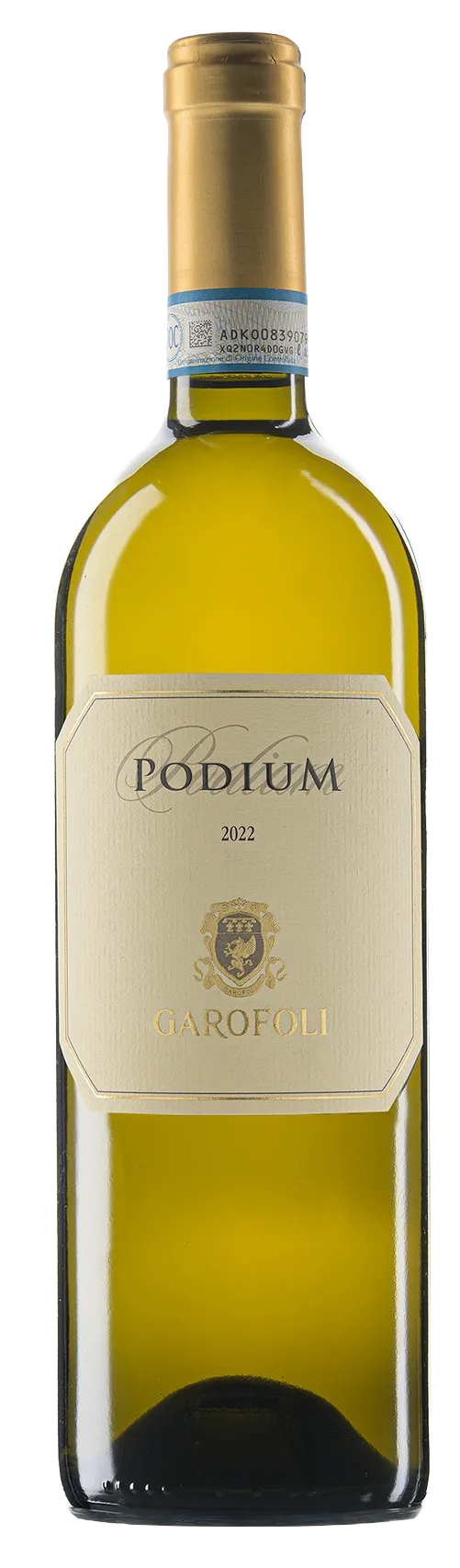
The name “Podium” comes from the shape of the vineyard: a long, plateau-like ridge resembling a podium or stage. (https://www.superiore.de/)
This symbolic name reflects the wine’s status—it stands elevated among Verdicchio wines.
Production and Style
Podium is made from 100% Verdicchio grapes, carefully selected and harvested at full maturity.
Key production details:
- Stainless steel fermentation
- Long aging on lees
- No wood aging
- Extended bottle maturation (Vino.com)
The result is a wine that combines:
- Purity
- Structure
- Longevity
Tasting Profile
Podium is widely recognized for its complexity and elegance.
Typical characteristics include:
Appearance
- Straw yellow with golden reflections
Aroma
- Citrus fruits
- Ripe yellow fruit
- Floral notes
- Subtle hints of honey and almond (Vivino)
Palate
- Rich and textured
- Balanced acidity
- Pronounced minerality
- Long, savory finish (https://www.superiore.de/)
This combination makes Podium both approachable and age-worthy.
Aging Potential
One of Podium’s defining features is its longevity.
While many white wines are meant to be consumed young, Podium can age:
- 10 years easily
- 15+ years in excellent vintages (Garofoli Vini)
This aging capability has been crucial in redefining the perception of Verdicchio as a serious wine.
Awards and Recognition
Podium has received numerous accolades over the years, confirming its status among Italy’s top white wines.
Notable recognitions include:
- Gambero Rosso “Tre Bicchieri” (Three Glasses), Italy’s highest wine award (Vino.com)
- High scores from critics such as:
- Recognition from Italian guides like Bibenda and Veronelli (Vino.com)
These awards highlight both consistency and excellence across vintages.
Podium’s Role in Elevating Verdicchio
Podium is more than just a successful wine—it is a milestone in Italian enology.
Historically, Verdicchio was not considered a premium grape. However, wines like Podium demonstrated that:
- Verdicchio can produce complex, structured wines
- It has significant aging potential
- It can compete with top white wines globally
This shift has influenced an entire generation of producers in Marche.
Community and Expert Perspectives
Even among wine enthusiasts, Podium is often cited as a standout example of Verdicchio.
From wine communities:
“Garofoli… Podium is one of the most interesting and memorable white wines I’ve had.” (Reddit)
Such comments reflect the wine’s impact beyond professional critics—it resonates with consumers and enthusiasts alike.
Food Pairing and Versatility
Podium’s structure and acidity make it highly versatile at the table.
Ideal pairings include:
- Seafood and shellfish
- White meats
- Risotto
- Vegetable dishes
Its balance of richness and freshness allows it to complement both delicate and moderately complex dishes.
Garofoli Today: Tradition Meets Modern Excellence
Today, Garofoli continues to evolve while maintaining its core identity.
The winery is known for:
- Sustainable vineyard practices
- Investment in modern technology
- Continued focus on indigenous grape varieties
Despite global expansion, Garofoli remains deeply connected to its territory.
Why Garofoli Matters in Italian Wine
Garofoli’s importance can be summarized in three key contributions:
1. Preservation of Tradition
By focusing on native grapes like Verdicchio, Garofoli helps preserve Italy’s viticultural heritage.
2. Innovation Without Compromise
The winery has modernized production without sacrificing authenticity.
3. Elevation of a Region
Garofoli has played a central role in putting Marche on the global wine map.
Conclusion: Podium as a Symbol of Excellence
Garofoli is not just a historic winery—it is a symbol of what Italian wine can achieve when tradition, innovation, and terroir come together.
Podium, its flagship wine, embodies this philosophy perfectly:
- It showcases the true potential of Verdicchio
- It combines elegance, structure, and longevity
- It has earned recognition from critics and enthusiasts alike
In a world where wine trends come and go, Podium stands as a testament to enduring quality and vision.
For anyone seeking to understand the depth of Italian white wines, Garofoli—and especially Podium—is not just a recommendation. It is a reference point.