
Pastai Sanniti is more than a pasta brand: it is the story of a territory, a family craft passed down through generations, and a contemporary reinvention led by one of Italy’s most original chefs, Giuseppe Iannotti. Rooted in the hills of Sannio, the company embodies a rare combination of memory, material quality, and innovation. What makes Pastai Sanniti particularly compelling is that it has never treated pasta as a commodity. Instead, it has approached pasta as a cultural object: something that carries geography, technique, local folklore, and now a new gastronomic vision. (Ice)
A story that begins in 1928
The roots of Pastai Sanniti go back to 1928, when the founding family began producing pasta in the Benevento area. For nearly a century, the company developed within a part of southern Italy where grain culture, peasant cooking, and artisanal food production were deeply embedded in everyday life. Unlike industrial producers that scaled rapidly through standardisation, Pastai Sanniti grew from a slower and more intimate tradition: family know-how, manual control, and close attention to ingredients and drying methods. (Ice)
The company’s historical identity is inseparable from the Samnite land itself. The name “Sanniti” refers to the ancient Samnites, an Italic people who inhabited the mountainous inland territory of Campania and Molise. This is not just branding. In many Italian food traditions, place determines product: climate affects grain, altitude affects drying, and local habits shape texture and form. Pastai Sanniti was born inside this logic. It was conceived as pasta that belonged to its territory, rather than pasta made anywhere for everywhere. (Ice)
For decades, the company maintained production methods associated with traditional pasta making in inland Campania: bronze die extrusion, slow processing, low-temperature drying, and significant manual oversight. This approach mattered because artisanal pasta quality is largely determined by process. Industrial pasta often prioritises speed, high heat, and output efficiency; artisanal producers focus instead on preserving wheat structure, flavour, porosity, and digestibility. Pastai Sanniti positioned itself firmly in the latter tradition. (Ice)
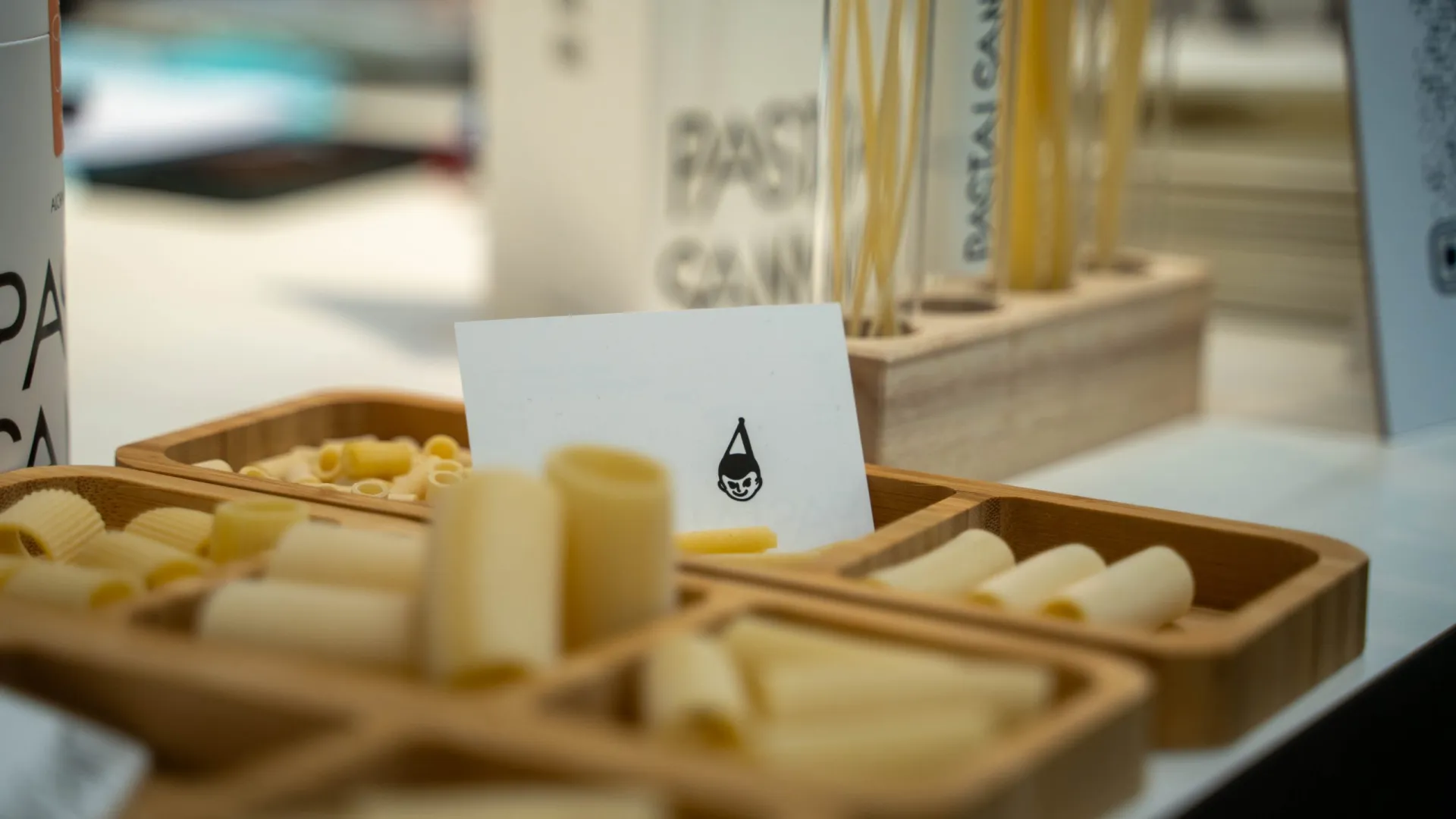
The importance of place: why Sannio matters
To understand Pastai Sanniti, you need to understand Sannio. The region around Benevento is one of southern Italy’s most distinctive inland food landscapes. It is far from the more internationally recognised coastal Campania of Naples and the Amalfi Coast. Sannio is hillier, more agricultural, and more tied to old rural rhythms. Wheat, legumes, olive oil, wild herbs, and preserved foods have historically been staples of the local table. (Ice)
This environment matters because pasta is not just flour and water. The surrounding ecosystem influences everything: water mineral composition, ambient humidity during drying, storage practices, and culinary pairings. Pastai Sanniti has long emphasized the use of spring water from the valleys around Monte Taburno. That detail is not trivial. Good water affects dough elasticity, extrusion consistency, and ultimately mouthfeel. (Ice)
The company has also historically linked its products to local stories and symbols. One example is “Papaline,” a proprietary pasta shape inspired by the papal history of Benevento, which was part of the Papal States for centuries. The shape references the pope’s rounded headgear and was designed to hold sauce efficiently. This kind of product reflects something essential about Pastai Sanniti: its belief that pasta can tell a story about where it comes from. (Ice)
Another example is “Pasta Stregata,” inspired by the witches’ legends of Benevento and flavored with Liquore Strega. While unusual, this line shows how the company historically experimented without abandoning its territorial identity. Even novelty products were anchored in local mythology. (Ice)
What makes Pastai Sanniti high quality
Pastai Sanniti’s quality rests on a few core principles that separate serious artisanal pasta from mass-market alternatives.
1. Wheat selection
Historically, the company focused on carefully selected durum wheat semolina, particularly from the heart of the grain. High-quality semolina matters because it affects protein structure, cooking resistance, and flavour release. Better semolina also means fewer defects, more even hydration, and stronger final texture. (Ice)
In traditional pasta making, protein quality is not just about having “more protein”; it is about how that protein behaves during kneading, extrusion, and cooking. Pastai Sanniti has consistently emphasised grain quality as foundational rather than secondary. (Ice)
2. Bronze die extrusion
One of the brand’s signature methods is bronze die extrusion. Bronze dies create a rougher, more porous surface than Teflon dies, which are common in industrial production. This roughness matters because sauce adherence improves dramatically. The pasta becomes a vehicle for flavour rather than just a neutral starch. (Ice)
Texture also benefits: the surface feels more substantial in the mouth, and the bite is less slippery. For cooks and chefs, this is essential because pasta must interact with the sauce rather than simply sit beneath it.
3. Slow drying at low temperatures
This is perhaps the most important quality marker. Pastai Sanniti reproduces a slow drying cycle at low temperatures, often described as a process closer to traditional sun-and-wind drying than industrial dehydration. This can take around 36 hours. (Ice)
Why does this matter?
- It preserves flavour compounds better.
- It protects the wheat’s aromatic profile.
- It avoids stress fractures in the pasta structure.
- It improves digestibility.
- It creates better resilience during cooking.
Fast drying at high temperatures may increase output, but it can flatten flavour and alter protein behaviour. Pastai Sanniti’s slower approach is one reason its pasta appeals to chefs and discerning consumers.
4. Attention to cooking performance
Pastai Sanniti has long emphasised pasta that maintains structure and integrity. Good pasta should resist overcooking, remain elastic, and deliver a clean bite. It should not release excessive starch into the water or become gummy. This is especially important in restaurant kitchens, where consistency matters across multiple servings. (Ice)
How Pastai Sanniti differs from other pasta brands
The pasta market is crowded, especially in Italy, where regional excellence is widespread. So what actually distinguishes Pastai Sanniti?
Territorial storytelling with authenticity
Many brands use place as marketing. Pastai Sanniti uses place as structure. Its shapes, flavours, folklore, and production identity all emerge from Sannio. This gives the brand coherence rather than superficial regional branding. (Ice)
A balance of artisan tradition and chef-driven precision
Many artisanal pasta makers preserve tradition but avoid innovation. Many chef-led food brands innovate but lack historical legitimacy. Pastai Sanniti now occupies a rare middle ground: nearly a century of inherited craft combined with contemporary technical thinking. (Ice)
A digestibility-first philosophy
One of the most notable recent differentiators is the focus on digestibility and gluten balance. Under its new phase, Pastai Sanniti has highlighted a low-gluten-index approach and careful grain selection that includes both Italian and international wheats. This is unusual in Italy, where national grain origin is often treated as an unquestioned virtue. Pastai Sanniti instead prioritises performance and physiological comfort over rhetoric. (Pastai Sanniti)
Format design as functional design
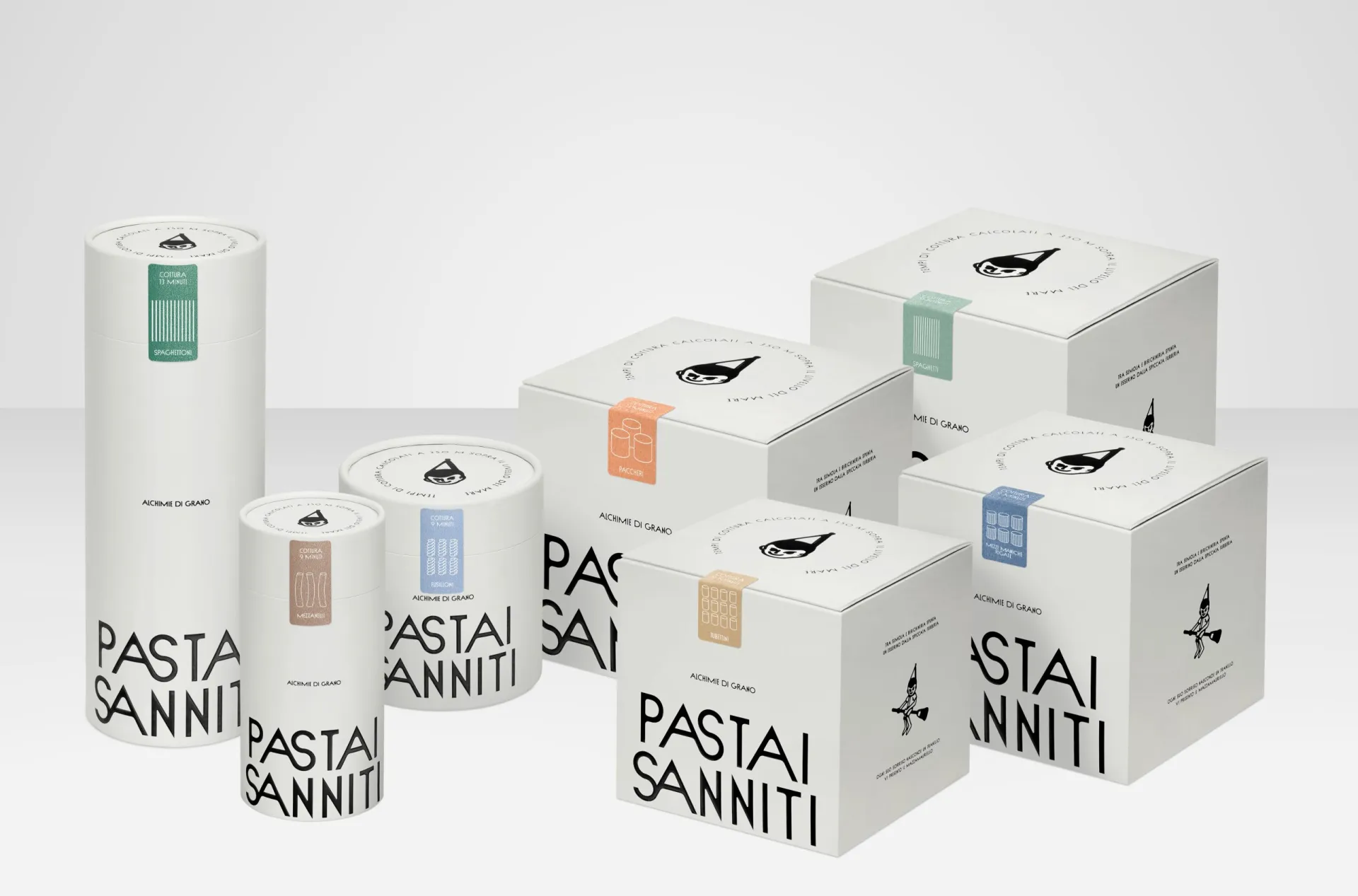
The new line includes 11 formats designed with careful attention to cooking expansion, portion control, and sauce interaction. Even packaging has been reconsidered, with formats calibrated around portion logic, such as 70-gram servings. This shows a systems-thinking approach that is uncommon in pasta branding. (Ristoranti Web)
The Giuseppe Iannotti era: a radical but coherent evolution
The biggest recent chapter in Pastai Sanniti’s history is the arrival of Giuseppe Iannotti, the chef behind Krèsios, one of Italy’s most respected fine-dining restaurants. After initially working with the pasta factory as a consultant, Iannotti eventually acquired the business, marking the start of a new phase. Sources indicate this transition began around 2023, with the broader launch of the new brand direction in late 2024 and public visibility expanding through 2025. (Gambero Rosso)
This matters because Iannotti is not a celebrity chef lending his name to a label. He is known for obsessive technical rigor, research-driven cooking, and a deep understanding of structure, process, and ingredient behavior. His involvement signals that Pastai Sanniti is being treated as a serious gastronomic project rather than a nostalgic heritage brand. (ilGiornale.it)
“Pasta born on planet Earth”

One of Iannotti’s most striking ideas for the new Pastai Sanniti is the concept of wheat “grown on planet Earth.” On the surface, it sounds playful, even provocative. In reality, it is a critique of rigid food dogmas. Iannotti has argued that relying only on Italian wheat is not always the best route to quality, especially if the goal is better digestibility, protein balance, and culinary performance. (Pastai Sanniti)
His approach is to source the best grains available—Italian and international—based on measurable characteristics rather than ideology. This reflects a broader shift in high-end food culture: transparency and performance matter more than simplistic origin claims.
Technical innovation without losing soul
Iannotti’s involvement has brought several changes:
- more rigorous grain blending;
- vacuum extrusion to better protect dough structure;
- careful dough cooling;
- precise moisture control;
- expanded chef-oriented formats;
- new packaging and design language.
These interventions modernise production while preserving the company’s artisanal backbone. The goal is not to industrialise the brand, but to make craft more precise and more relevant to contemporary consumers. (Pastai Sanniti)
Rebranding and new narrative
The rebrand also introduced the figure of the Mazzamauriello, a mischievous folkloric spirit from Samnite tradition, as a central symbol. This was a smart move: rather than abandoning heritage in favor of sleek minimalism, the new Pastai Sanniti doubled down on local mythology while giving it a contemporary visual language. (Pastai Sanniti)
This is where the project feels particularly modern. It understands that premium food today is not just about product quality. It is also about narrative, trust, identity, and emotional connection.

Why Pastai Sanniti matters now
Pastai Sanniti matters because it represents a broader evolution in Italian food culture.
For years, artisanal food brands often faced a false choice:
- remain traditional but risk irrelevance,
- or modernise and lose authenticity.
Pastai Sanniti suggests a third path: evolve without severing roots.
Its history gives it credibility. Its production standards give it substance. Its relationship to Sannio gives it emotional depth. And Iannotti’s involvement gives it intellectual ambition. Together, these elements create something rare: a pasta brand that respects the past but is not trapped by it. (Ice)
In a market saturated with industrial sameness and heritage clichés, Pastai Sanniti stands out because it treats pasta as a serious craft. It understands that quality is not one thing but a chain of decisions: grain, water, process, drying, shape, story, and context.
That is why Pastai Sanniti is not simply different from other pasta. It is a compelling example of how a regional Italian product can remain deeply local while becoming more contemporary, more technical, and more ambitious than ever before. (Ice)